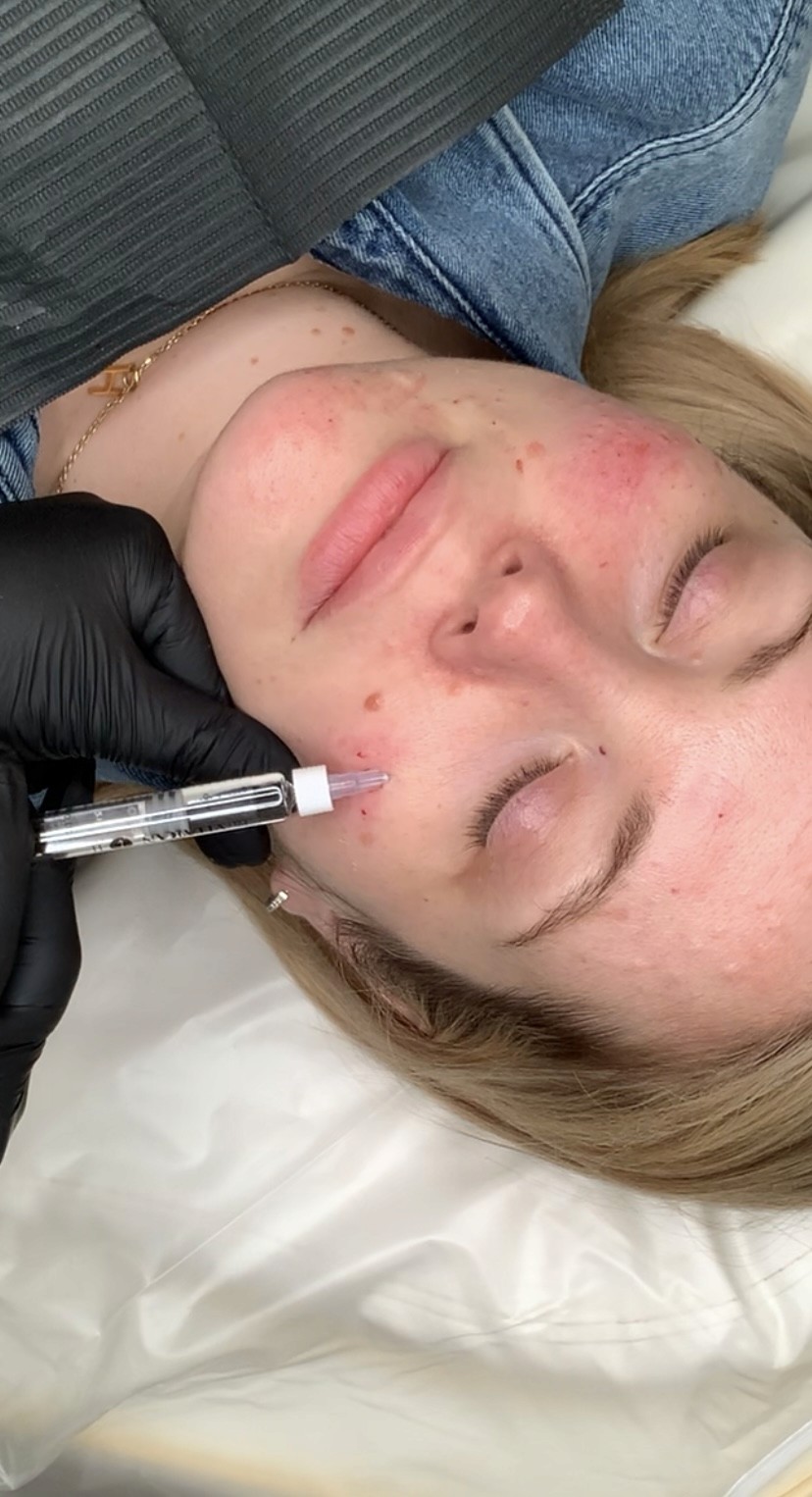
Your Complete Guide to Polynucleotides
By Lil, Registered Nurse and Founder of Aphelia Aesthetics
If you’ve been scrolling skincare content lately, you’ve probably seen polynucleotides mentioned. They’re one of the most asked-about treatments in clinic right now, and for good reason.
Rather than filling or freezing, polynucleotides work on the health of your skin itself. They help it repair, strengthen and look brighter, so the results look like you on a really good day.
In this guide I’ll explain what polynucleotides are, how they work, who they’re best for and what you can expect.
What are polynucleotides?
Polynucleotides are purified fragments of DNA, usually taken from salmon. That might sound unusual, but these fragments are very similar to our own and are highly purified, so the body accepts them well.
Once injected into the skin, they act like a repair signal. They encourage your fibroblasts, the cells that make collagen and elastin, to work harder, and they help calm inflammation and support healing.
Think of them as giving your skin the tools to fix itself.
How are they different to skin boosters or filler?
This is one of the questions I’m asked most.
Dermal filler adds volume to restore shape and structure.
Skin boosters like Profhilo deliver hydration to plump and soften the skin.
Polynucleotides focus on repair, improving the quality, thickness and resilience of the skin from within.
They’re not competing treatments. In my programmes I often use polynucleotides first to get the skin healthy, and then add other treatments if they’re needed.
What can polynucleotides help with?
Dark circles and crepey skin under the eyes
Fine lines and dull, tired-looking skin
Loss of firmness and elasticity
Uneven texture and enlarged pores
Acne scarring
Redness and sensitive skin
Neck and décolletage
The under-eye area is one of the most popular. It’s a delicate area that many treatments can’t reach safely, and polynucleotides can make a lovely difference to dark, thin or crepey skin.
Who are they suitable for?
Polynucleotides suit most adults who want healthier, fresher-looking skin, whether you’re noticing the first signs of ageing or want to improve sun damage, scarring or sensitivity.
They aren’t suitable for everyone. I won’t treat you if you’re pregnant or breastfeeding, have a fish or salmon allergy, or have an active infection in the area. That’s why every treatment starts with a full consultation.
What happens during treatment?
Your appointment starts with The Aphelia Method consultation, where I look at your skin, your goals and your medical history before we agree a plan.
Numbing cream is applied, and then the polynucleotides are placed into the skin with fine injections. Treatment takes around 30 minutes.
For the best results I recommend a course of two to three sessions, two to four weeks apart.
Is there any downtime?
You may notice small bumps where the product was placed, along with some redness or mild swelling. These usually settle within 24 to 48 hours. Bruising is possible, especially under the eyes, so I’d avoid booking right before a big event.
Most people go straight back to their day.
When will I see results?
Polynucleotides work gradually, because your skin is rebuilding itself. Most clients notice brighter, healthier-looking skin a few weeks after their first session, with the best results around three months after completing the course.
Results usually last around six to twelve months. A top-up session once or twice a year keeps your skin looking its best.
Getting the most from your treatment
Polynucleotides work beautifully alongside microneedling, RF microneedling and a good medical-grade skincare routine. They’re part of my 10 Years Younger programme for exactly this reason: healthy skin first, then everything else looks better.
Is it right for you?
If your skin is looking tired, thin or just not quite itself, polynucleotides could be a great place to start. The best way to find out is to come and see me for a consultation, and I’ll put together a plan that’s right for your skin.
Lil x